
How Often Should You Clean Your Air Ducts in Tampa’s Humid Climate?
You notice a faint musty smell the moment your AC kicks on, or maybe you spot a gray film collecting on the supply vents faster than it should. If you live in Tampa, that experience is more common than most homeowners expect. The combination of near-constant humidity, long cooling seasons, and older duct systems makes air duct cleaning a recurring maintenance need here, not a one-time fix. This guide breaks down exactly how often you should clean your air ducts, what drives that schedule in Tampa specifically, and the warning signs that tell you it’s time to act sooner.
The Baseline Recommendation for Duct Cleaning Frequency
The industry standard, guided by NADCA (the National Air Duct Cleaners Association), suggests most residential duct systems be inspected and cleaned every three to five years under normal conditions. That range assumes a temperate climate, a well-sealed home, and no unusual sources of contamination. For many parts of the country, that interval works fine.
Tampa is not most parts of the country. The three-to-five-year window is a starting point, not a ceiling, and local conditions frequently push the appropriate interval closer to every two to three years for a typical Tampa home. Some households need attention even more often, depending on the factors covered below.
The core takeaway: use the national guideline as a floor, then adjust upward based on your home’s specific situation. The sections that follow explain what drives that adjustment in the Tampa Bay area.
Why Tampa’s Climate Accelerates Buildup Inside Ductwork
Tampa averages roughly 250 days per year where outdoor relative humidity sits above 60 percent. When humid air infiltrates ductwork, whether through leaky seams, an undersized system, or a condensate drain that isn’t draining properly, the interior of your ducts becomes a hospitable environment for mold spores and dust mites to establish themselves.
Your air conditioning system runs for a much longer season here than in northern states, sometimes nine to ten months out of the year. More runtime means more air volume moving through the ducts, which means more particulate matter deposited on interior surfaces over time. Dust, pollen, pet dander, and construction debris all accumulate faster simply because the system never really rests.
There is also the condensation factor. When cold air moves through ducts that pass through unconditioned attic spaces, which is the case in the vast majority of Tampa-area homes, temperature differentials can cause moisture to collect inside the ductwork. That moisture, combined with organic debris already present, creates the conditions where microbial growth becomes a real concern. For a deeper look at this dynamic, see how Tampa’s humidity affects your ductwork.
Tampa’s Housing Stock and What It Means for Your Ducts
A meaningful portion of Tampa’s residential housing was built between the 1960s and the 1990s. Duct systems installed during those decades were often constructed with fiberglass duct board or older flex duct materials that degrade over time. As the inner liner of flex duct deteriorates, it sheds small fibers and creates irregular surfaces where debris clings more readily than it would in smooth metal ductwork.
Homes in neighborhoods like Seminole Heights, Carrollwood, and South Tampa frequently have original duct systems that have never been professionally cleaned. If you purchased an older home and have no documentation of prior duct cleaning, scheduling a professional inspection is a reasonable first step regardless of how many years have passed since your last service.
Newer construction in areas like Westchase, New Tampa, and Wesley Chapel is not exempt either. Construction dust, drywall particulate, and insulation fibers routinely make their way into duct systems during the building process. NADCA guidelines specifically recommend cleaning before occupying a newly constructed home, and that recommendation applies directly to new builds across the Tampa metro.
Permit and inspection requirements for duct work vary by municipality and county within the Tampa Bay area. If you are considering duct modifications alongside a cleaning, check with your local building department or consult a licensed contractor, as requirements differ across Hillsborough, Pinellas, and Pasco counties.
Factors That Should Shorten Your Cleaning Interval
Certain conditions consistently push the recommended schedule earlier. If any of the following apply to your Tampa home, plan for cleaning closer to every two years rather than every three to five.
- Pets in the home: Dog and cat dander, along with fur that gets drawn into return vents, accumulates quickly. Homes with multiple pets often need more frequent filter changes and shorter duct cleaning intervals.
- Household members with respiratory sensitivities: If anyone in your home manages asthma or seasonal allergies, keeping ductwork cleaner more often may help reduce the concentration of airborne irritants circulating through the system.
- Recent renovation or remodeling work: Drywall sanding, tile cutting, and demolition work generate fine particulate that infiltrates ducts even when vents are covered. A post-renovation cleaning is worth scheduling before resuming normal HVAC use.
- Visible mold or musty odors: These are not situations to wait out. If you notice a persistent musty smell when the system runs, or visible discoloration around supply registers, schedule an inspection promptly. The signs of mold in Tampa air ducts article covers what to look for in detail.
- Pest activity: Rodents and insects that enter ductwork leave behind debris and waste that contaminates the airstream. If you have had a pest issue resolved, duct cleaning should be part of the remediation process.
- Water intrusion or flood damage: Tampa’s hurricane season and heavy summer storms occasionally result in water entering attic spaces or the air handler cabinet. Any moisture event that affects the duct system warrants immediate inspection.
How Do You Know If Your Air Ducts Need to Be Cleaned Right Now?
Waiting for your scheduled interval is the right approach under normal conditions, but your home will often give you earlier signals that something needs attention. Here are the most reliable indicators that your ducts need cleaning sooner rather than later.
Visual Clues Around Your Vents and Registers
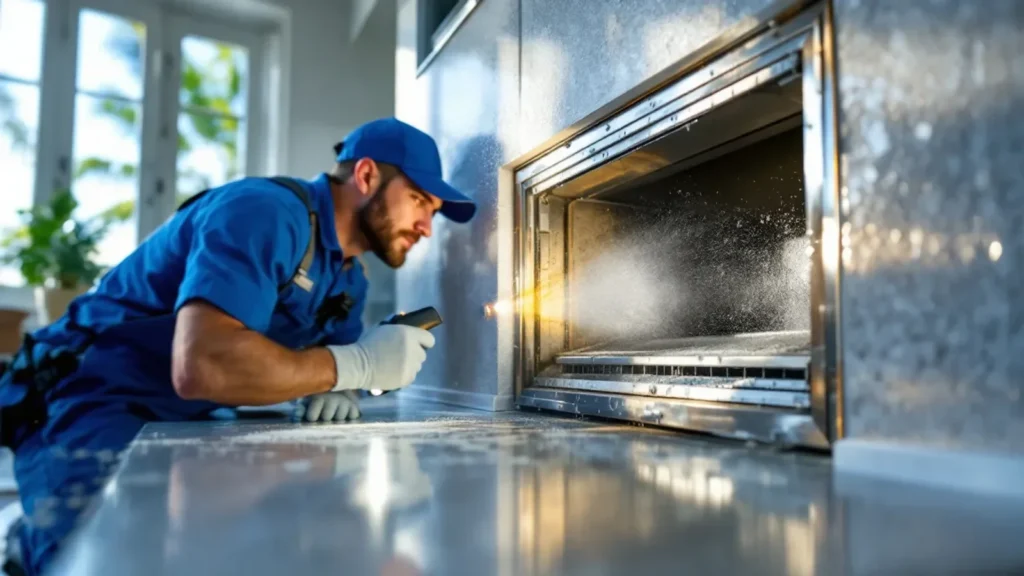
Pull a supply register off the wall and shine a flashlight inside the duct. A light coating of settled dust is normal. Dark, matted buildup on the interior surfaces, visible debris accumulation, or any discoloration that looks gray-green or black warrants a professional look. Similarly, if dust reappears on your vent covers within days of wiping them down, the system is circulating a heavier-than-normal particulate load.
Changes in Airflow or System Performance
Restricted airflow through clogged ducts forces your HVAC system to work harder to maintain setpoint temperatures. If certain rooms in your Tampa home feel harder to cool than they used to, or if your energy bills have crept upward without a change in usage habits, debris buildup in the ductwork is one possible contributor worth ruling out.
Odors That Start When the System Runs
A musty or stale smell that appears specifically when the AC turns on, and disappears when the system is off, is one of the clearest signals that something inside the duct system needs attention. In Tampa’s climate, that smell is often associated with microbial growth encouraged by excess moisture. Do not mask it with air fresheners; investigate the source.
Duct Cleaning Frequency by Household Type: A Quick Reference
| Household Situation | Suggested Cleaning Interval | Notes for Tampa Homes |
|---|---|---|
| No pets, no smokers, no sensitivities | Every 3 years | Humidity still accelerates buildup vs. drier climates |
| One or two pets | Every 2 years | Combine with regular filter changes (every 60 days) |
| Multiple pets or heavy shedders | Every 12-18 months | Monitor filter loading as an early indicator |
| Household member with respiratory sensitivities | Every 2 years or sooner if symptoms worsen | Consider higher-MERV filtration between cleanings |
| Post-renovation or new construction | Once before occupancy, then standard schedule | Construction dust is especially problematic in flex duct |
| Visible mold, pest activity, or water intrusion | Immediately | Do not delay; moisture events move quickly in Tampa’s climate |
What Happens During a Professional Duct Cleaning in Tampa
Understanding the process helps you evaluate whether a service was done correctly. A thorough cleaning involves more than blowing air through the system. A qualified technician will create negative pressure inside the duct system using a high-powered vacuum collection unit, then use agitation tools, brushes, and compressed air whips to dislodge debris from duct walls and drive it toward the collection point. Every supply and return register should be addressed, along with the air handler cabinet, evaporator coil area, and blower components.
If a company offers to clean your ducts in under an hour for a very low price, that timeline is generally inconsistent with a thorough job on a typical Tampa home. A proper cleaning on an average-sized residential system takes several hours. For a full breakdown of what drives the scope and cost of the service, see our guide to duct cleaning cost factors in Tampa.
Choosing the right company matters as much as choosing the right interval. Look for technicians who follow NADCA standards and can explain their process clearly before they start. How to choose a Tampa duct cleaning company walks through the specific questions worth asking before you book.
Maintaining Your Ducts Between Professional Cleanings
A professional cleaning resets the clock, but what you do between visits affects how long that reset lasts. A few habits make a meaningful difference in Tampa’s environment.
Filter Replacement
In Tampa’s climate, a standard one-inch filter in a home without pets should be replaced every 60 to 90 days at most. Homes with pets or higher dust loads may need monthly changes. A clogged filter bypasses protection entirely as air finds paths around it, and the debris that would have been captured ends up deposited inside the ductwork instead.
Humidity Control
Keeping indoor relative humidity between 45 and 55 percent limits the conditions that encourage microbial growth inside ducts. A properly sized and maintained AC system handles most of this in Tampa, but homes with persistent humidity issues may benefit from a whole-home dehumidifier. After a professional cleaning, maintaining that humidity range helps preserve the results. For more on this, see post-cleaning humidity tips for Tampa homeowners.
Seal and Inspect Duct Connections
Leaky duct connections in unconditioned attic spaces draw in hot, humid attic air and accelerate contamination. If your technician identifies leaks during a cleaning visit, addressing them promptly extends the life of the clean system. This is especially relevant in Tampa homes with attic ductwork exposed to extreme summer heat.
Frequently Asked Questions
Does Tampa’s climate really make duct cleaning necessary more often than the national average?
Yes, for most homes. The combination of high ambient humidity, long AC runtime seasons, and the prevalence of flex duct in attic spaces creates conditions where debris and moisture accumulate faster than in drier or cooler climates. The national three-to-five-year guideline is a reasonable baseline, but Tampa homeowners generally benefit from moving toward the shorter end of that range or shortening it further based on household factors.
How do I know if my ducts have mold and not just dust?
Mold inside ductwork often produces a musty or earthy odor that is strongest when the system first turns on. Visual inspection with a flashlight at the register opening may reveal discoloration, but mold growth deeper in the duct system or on internal surfaces is not always visible from the outside. A professional inspection with camera equipment can confirm what is present. See the warning signs of mold in Tampa ducts for a more detailed breakdown.
Can I clean my own air ducts?
Homeowners can remove and wash vent covers and use a vacuum hose to clear visible debris near register openings, which is worthwhile routine maintenance. However, reaching the full depth of a duct system, including the main trunk lines, air handler cabinet, and evaporator coil area, requires commercial-grade negative-pressure equipment and agitation tools that are not practical for DIY use. Attempting to clean deep ductwork without proper equipment can dislodge debris and redistribute it through the home rather than capturing it.
Does new construction in Tampa need duct cleaning before move-in?
It often does. Construction generates significant amounts of fine dust, drywall particulate, and insulation fibers that settle inside duct systems during the building process. NADCA recommends cleaning newly constructed homes before occupancy, and that guidance applies to new builds across the Tampa Bay area. If you are moving into a newly built home, ask whether a post-construction duct cleaning was performed before closing.
Will cleaning my ducts lower my energy bills?
Heavy debris buildup can restrict airflow and cause your HVAC system to work harder to reach setpoint temperatures, which increases energy consumption. Cleaning the ductwork restores designed airflow, which can improve system efficiency. The degree of improvement depends on how restricted the system was before cleaning. It is one piece of overall HVAC maintenance, not a standalone energy solution.
How long does a professional duct cleaning take for a typical Tampa home?
A thorough cleaning on a typical single-family home in Tampa generally takes between three and five hours, depending on the size of the system, the number of supply and return vents, and the level of buildup present. Jobs involving mold remediation, post-construction debris, or pest contamination may take longer. Be cautious of services that promise completion in under an hour, as that timeline is rarely consistent with a complete cleaning.
Schedule Your Tampa Duct Cleaning with Confidence
Tampa’s climate does not give your duct system the same grace period that homeowners in drier parts of the country enjoy. Between the humidity, the long cooling season, and the region’s older housing stock, staying on a consistent maintenance schedule is the most straightforward way to keep your system running cleanly and your indoor air quality in a reasonable range.
If it has been more than two years since your last cleaning, or if you are noticing any of the warning signs covered above, this is a good time to schedule a professional inspection. Our complete guide to air duct cleaning in Tampa covers everything you need to know about the full process, or you can contact Express Air Duct Cleaning directly to book a service visit for your Tampa home. Our technicians follow NADCA standards on every job and can assess your system’s actual condition before recommending a course of action.