
Why Does Tampa Humidity Cause Dirty Air Ducts?
Florida ranks among the most humid states in the country, and Tampa’s subtropical climate keeps relative humidity above 70% for much of the year. That persistent moisture doesn’t just make summer afternoons uncomfortable, it quietly works its way into your home’s ductwork, accelerating the buildup of dust, biological growth, and debris at a pace most homeowners don’t expect. If you’ve ever wondered why your vents seem to get grimy so quickly, Tampa’s air is a big part of the answer.
What Does Humidity Actually Do Inside a Duct System?
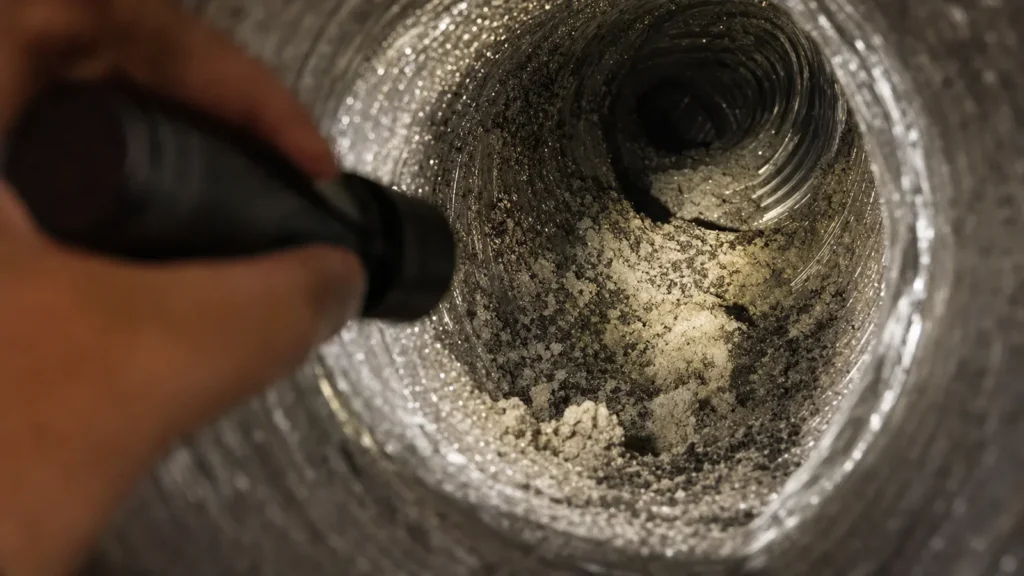
When warm, moisture-laden air contacts the cooler metal surfaces inside your ductwork, condensation forms. That thin film of moisture acts like glue, causing airborne dust, pollen, and skin cells to stick to duct walls rather than pass through. Over time, those stuck particles accumulate into dense layers. High humidity also raises the water activity inside the duct environment, which creates conditions where biological growth can take hold much more readily than in drier climates. The result is a system that gets noticeably dirtier between service intervals compared to homes in arid regions.
Why Is Tampa’s Climate Particularly Hard on Ductwork?
Tampa sits on a peninsula bordered by Tampa Bay and the Gulf of Mexico, which means sea breezes carry salt-laden moisture inland year-round. The city averages more than 40 inches of rainfall annually, much of it concentrated in intense afternoon storms from late spring through early fall. Even outside storm season, overnight humidity rarely drops low enough to dry out duct interiors completely. Air conditioning systems run almost continuously to compensate, and every time a system cycles, it pulls humid outdoor air through small gaps in duct seams and return-air pathways. Tampa’s building stock, which includes a large share of homes built in the 1970s through 1990s with older flex-duct systems, compounds the problem because those older materials are more prone to small leaks that invite moisture intrusion.
How Does Moisture Connect to Dust Buildup?
Dry dust is relatively easy for a properly rated filter to capture. Damp dust is a different story. When particles absorb moisture, they clump together and become heavier, meaning they fall out of the airstream and settle onto duct surfaces before reaching the filter. This clumping also makes particles harder to dislodge during routine filter changes. Over a typical service interval, a Tampa home can accumulate significantly more compacted debris on duct walls than a comparable home in, say, Phoenix or Denver. That compacted layer is exactly what professional duct cleaning equipment is designed to break loose and extract.
Can High Humidity Lead to Mold Inside the Ducts?
It can, and this is one of the more serious concerns for Tampa homeowners. Mold spores are always present in outdoor air, and Tampa’s air carries a particularly high spore load during the rainy season. When those spores land on a damp duct surface that also has an organic food source, dust, skin cells, debris, they have what they need to colonize. Visible mold growth inside ductwork is not inevitable, but the conditions Tampa creates make it a realistic risk, especially in systems that haven’t been serviced in several years or that have insulation damage. If you notice a musty smell coming from your vents, that’s a signal worth investigating promptly. You can learn more about what to look for in our article on identifying mold growth in Tampa air ducts.
How Does the AC System Itself Contribute to the Problem?
Tampa’s heat means air conditioning runs far more hours per year than in most U.S. cities. That heavy runtime has two effects on duct cleanliness. First, more air cycles through the system, which means more particles have the opportunity to deposit on duct walls. Second, the evaporator coil inside the air handler constantly removes moisture from indoor air, and if that coil or its drain pan isn’t maintained, excess moisture can migrate into the supply plenum and connected ductwork. A system that’s working overtime in humid conditions needs more frequent attention to all its components, not just the filter. Understanding how often you should clean your air ducts in a climate like Tampa’s helps you build a maintenance schedule that accounts for this extra workload.
Does the Age of a Tampa Home Change the Risk?
Yes, meaningfully. Many Tampa neighborhoods, particularly in areas like Carrollwood, Brandon, and Seminole Heights, have substantial housing stock from the 1970s through the early 1990s. Duct systems from that era were often installed with fiberglass-lined flex duct that, after decades of use in a humid environment, can develop interior liner degradation. That degraded lining creates a rough, porous surface that traps moisture and particles far more aggressively than smooth metal ductwork. Older systems are also more likely to have accumulated years of debris that was never fully removed. If your home is more than 20 years old and has never had a professional duct cleaning, the interior condition of those ducts is likely worse than you’d expect.
How Do I Know If Humidity Has Already Affected My Ducts?
Several signs suggest moisture has been working on your duct system. A persistent musty or stale odor when the AC runs is one of the most common indicators. Visible dust or dark streaking around supply registers, especially shortly after you’ve cleaned them, points to heavy debris accumulation inside. Uneven airflow between rooms, where some areas feel noticeably warmer or harder to cool, can indicate blockages. Allergy-like symptoms that seem worse indoors than outdoors during pollen season may also correlate with a duct system that is recirculating trapped particles. For a more detailed breakdown of warning signs, see warning signs of duct contamination in Tampa homes.
What Can Tampa Homeowners Do to Slow Down Duct Contamination?
Professional cleaning addresses what has already accumulated, but a few consistent habits help slow the rate of future buildup. Using a filter with a MERV rating appropriate for your system (typically MERV 8 to MERV 11 for most residential systems) captures more particles before they reach the duct walls. Changing that filter on schedule, more frequently during high-pollen months or if pets are in the home, keeps the filter from becoming a bypass point for debris. Keeping indoor humidity between 45% and 55% with a properly sized AC system or a supplemental dehumidifier reduces the moisture film that helps particles stick. After a professional cleaning, managing indoor humidity in Tampa becomes easier because there’s less debris acting as a moisture reservoir. Sealing any visible gaps around registers and return-air grilles also limits the amount of unconditioned air that can pull in from humid attic or crawlspace areas.
How Does Humidity Affect How Often Cleaning Is Actually Needed in Tampa?
The standard industry guidance from organizations like NADCA suggests most homes benefit from duct cleaning every three to five years. In Tampa, that general range often compresses toward the shorter end of the spectrum. Homes with pets, residents with respiratory sensitivities, older flex-duct systems, or a history of water intrusion events may need attention closer to every two to three years. The compounding effect of high humidity, heavy AC runtime, and the region’s elevated outdoor spore and pollen counts all push the timeline forward compared to what a homeowner in a drier climate might expect. For a full breakdown of what drives the right interval for your specific home, the complete guide to duct cleaning frequency in Tampa walks through each factor in detail. If you’re weighing whether the timing is right for your home, reviewing what influences duct cleaning costs in Tampa can also help you plan ahead.
Is Professional Cleaning the Only Solution, or Are There DIY Options?
Homeowners can handle a few things on their own safely: changing filters regularly, vacuuming register covers when they’re removed for filter access, and keeping the area around return-air vents clear of furniture or drapes. What isn’t practical or safe for a DIY approach is the interior of the duct runs themselves. Effective removal of compacted debris and any biological growth from duct walls requires truck-mounted or high-powered portable vacuum equipment combined with agitation tools that dislodge material from duct surfaces. Attempting to clean deep into ducts with a household vacuum or compressed air can redistribute debris rather than remove it. For Tampa homes where moisture has already contributed to significant buildup, professional extraction is the only method that actually clears the system rather than moving the problem around.
Tampa’s climate is genuinely one of the more demanding environments for residential ductwork in the continental United States. The combination of year-round humidity, heavy AC use, and a large inventory of aging duct systems means contamination builds faster and carries more risk than homeowners often realize. Recognizing that moisture is the underlying driver, not just dust, is the first step toward keeping your system in better shape between professional services. If it’s been more than a couple of years since your last cleaning, or if you’re noticing any of the warning signs described above, reaching out to schedule an inspection is a straightforward next step. Contact Express Air Duct Cleaning to have a Tampa technician assess your system and give you an honest picture of what’s inside.