
Dryer vent cleaning — Jupiter, FL
Two cycles to dry one load.
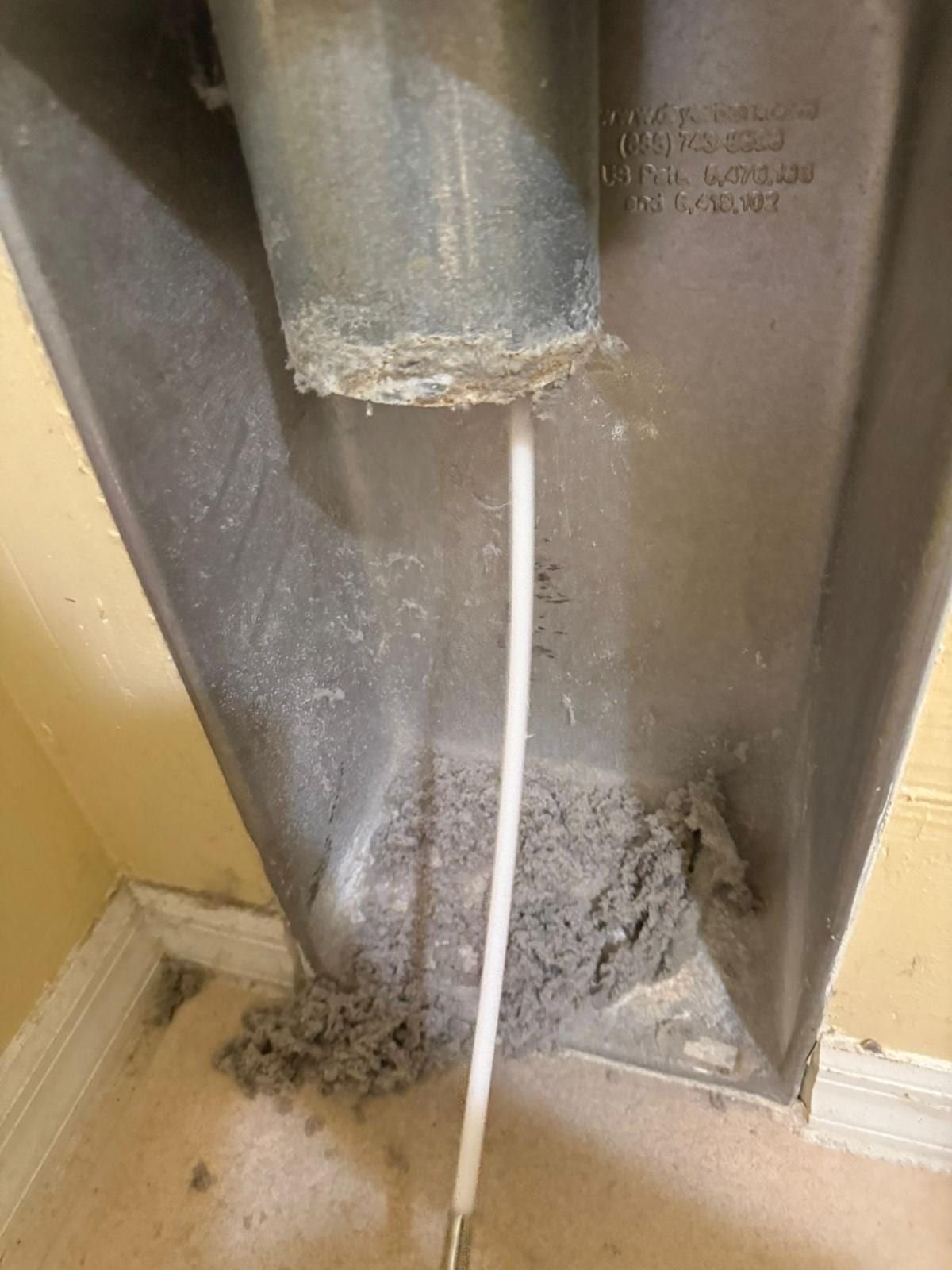
We clear the whole exhaust line — the connector behind the drum, every elbow, and the cap outside.
- A load that needs two cycles to dry
- A dryer hot to the touch at the end
- A laundry room that turns humid
- Lint appearing around the outside vent
Sun–Thu 7 AM–8 PM · Fri 7 AM–6 PM · Sat closed
Florida licensed
AC contractor CAC1822067
Business hours
Sun–Thu 7 AM–8 PM · Fri 7 AM–6 PM · Sat closed
Same or next day
Scheduling that fits your week
4.9★
43 Google reviews
Why the line matters
What changes once the exhaust line is clear.
A dryer is a fan pushing warm, wet air down a duct. Everything below follows from one question: can that air leave the house, or not?
Drying time comes back
A loaded line makes the dryer run a second cycle to finish one load. It is the complaint we hear most on the phone, and it is the first thing that changes.
Less lint where the heat is
Lint is highly flammable, and lint sitting in a hot exhaust line is one of the most common causes of laundry-room fires. Clearing it takes the fuel out.
A laundry room that stays dry
Warm, damp air that cannot leave through the duct leaves through the joints instead. That is why the room turns humid and warm while the dryer runs.
The dryer works less hard
A machine that has to run twice does twice the work for the same laundry. Restoring the airflow is the cheapest thing anyone can do for how long it lasts.
A flapper that still seals
The cap outside has to open with the air and close when the dryer stops. One held open by lint is an invitation to whatever wants to nest in a warm duct.
The lint leaves the house
The line is held under vacuum while the brush runs, so what comes loose travels into our equipment rather than onto the laundry floor or back into the room.
The visit, step by step
Five steps, from the drum to the cap.
Tap any step to see what happens in the laundry room on the day. The dryer line is its own run: it shares nothing with the air-conditioning ducts except the house.
- The dryer comes outWe start at the connector, not at the wall.
- The line goes under vacuumSo the lint leaves the house, not the room.
- A rotary brush runs the full lengthEvery elbow, and the whole rise.
- The cap outside is clearedIncluding a termination on the roof.
- The flapper is checked, the floor sweptIt has to open, and it has to close.
Step 1 of 5
The dryer comes out
The appliance is pulled forward and the connector behind the drum comes off. That first section is the one that crushes when a dryer is pushed back into place, and it is where the first plug of lint usually sits.
Step 2 of 5
The line goes under vacuum
Before any brush turns, the duct is put under negative pressure at the appliance end, so everything the brush releases travels into our equipment instead of into the laundry room. One review on the profile describes exactly that: no lint escaping into the living rooms.
Step 3 of 5
A rotary brush runs the full length
Lint does not settle evenly. It packs where the duct turns and where it climbs, because that is where the air slows down. The brush travels the full run rather than the first foot a shop vacuum at the wall can reach, and that far length is the part that decides how the dryer behaves.
Step 4 of 5
The cap outside is cleared
The termination is opened and cleared from outside. Several reviews on this profile describe a roof cap completely stuffed with lint, cleared from the roof rather than only from the wall. A vertical run is the hardest part of any dryer line, because gravity works against the exhaust the whole way up.
Step 5 of 5
The flapper is checked, the floor swept
The flapper has to open with the air and seal when the dryer stops, or the duct becomes somewhere to nest. It is checked with the dryer running and again with it off. Then the appliance goes back, the connection is re-made, and the laundry floor is swept before we leave.
- 4.9
Rating on the Jupiter Google profile
- 42
Of the 43 reviews are five stars
- 14
Towns we clear dryer lines in
Often the same visit
The two services this crew's reviews describe.
Where we clear dryer lines
Jupiter, and thirteen towns around it.
Where the dryer sits decides the job: a ground-floor laundry venting through a side wall is not the same visit as a run that climbs to a cap on the roof. Each town has its own page.
Palm Beach County, with the towns we serve picked out. Stuart is served too and sits in Martin County, just off this map.
Green: we serve itCoverage check
Is your town on the list?
- Greenacres 17,482 homes
- Juno Beach 3,658 homes
- Jupiter 31,257 homes
- Jupiter Inlet Colony 238 homes
- Lake Worth Beach 17,949 homes
- Lantana 6,032 homes
- North Palm Beach 8,427 homes
- Palm Beach Gardens 31,400 homes
- Palm Springs 10,037 homes
- Riviera Beach 18,039 homes
- Royal Palm Beach 14,705 homes
- Stuart 10,577 homes
- Tequesta 3,424 homes
- The Acreage 13,450 homes
- JupiterNamed in 10 of the crew's Google posts
- Juno BeachNamed in 4 of the crew's Google posts
- Palm Beach GardensNamed in 4 of the crew's Google posts
- Jupiter Inlet ColonyNamed in 3 of the crew's Google posts
- TequestaNamed in 3 of the crew's Google posts
What people wrote about their dryer line.
“cut my drying time in half”
“so glad I did this. the dry vent clean cut my drying time in half. will definitely be putting them on my annual maintenance schedule.”
“Roof-mounted vent cap was completely stuffed with lint”
“Roof-mounted vent cap was completely stuffed with lint; huge relief having them handle the dry vent clean up there.”
“no lint was able to escape into our living rooms”
“Since our dryer vent cleaning visit was sealed with an airtight vacuum, no lint was able to escape into our living rooms. He was very professional and had on protective boots and swept the whole laundry floor before leaving. Our equipment runs like new and we feel entirely protected.”
“confirmed that the flapper sealed well when off”
“We used high powered vac equipment to ensure a thorough dry vent clean of our lengthy exhaust duct. He examined our roof jack termination hood, cleared a large lint obstruction and confirmed that the flapper sealed well when off. the dry vent clean solved our long cycle issues all together.”
“dislodged an outside clog of lint”
“We had wet clothing sitting in the drum for hours until a quick dry vent clean out dislodged an outside clog of lint.”
“easily cleared the external roof cap”
“During our complete house dry vent clean the tech easily cleared the external roof cap.”
Before you call
The questions we get on the phone.
Still not sure which one you need? Call (561) 652-5107 and a technician will talk it through.
Ask us directlyHow do I know the dryer vent needs cleaning?
How long does a dryer vent cleaning take?
Can you reach a termination on the roof?
Will you move the dryer?
How often should a dryer vent be cleaned?
Is this the same visit as the air ducts?
What does it cost?
Book the visit
Tell us how long a load takes to dry.
That one answer tells us most of what we need to know before we arrive, and so does whether the vent comes out through a wall or through the roof.
Fastest way
(561) 652-5107